

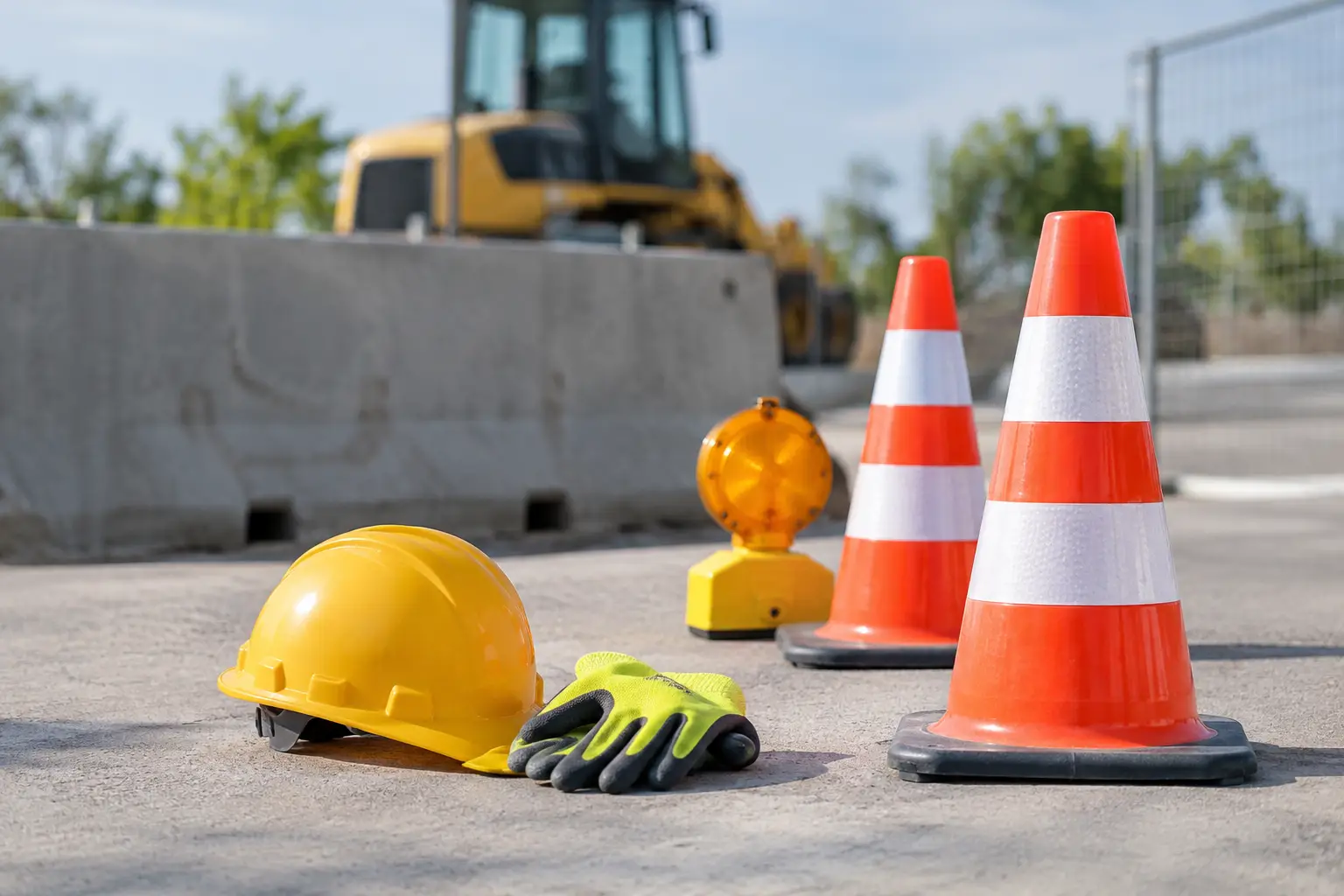
A reversing delivery vehicle, a forklift leaving a warehouse aisle, or a contractor walking through a loading area can create serious exposure in seconds. The right traffic safety equipment gives people clear instructions, separates them from moving vehicles and makes changing site conditions easier to manage. For busy industrial, construction, logistics and commercial sites, it is a practical part of daily operational control, not an afterthought.
Effective traffic control starts before equipment is ordered. A cone placed in the wrong position or a sign hidden by stacked materials will not correct a poorly planned vehicle route. The strongest results come from matching products to a site traffic plan that considers vehicle types, pedestrian routes, delivery schedules, visibility, surface conditions and the level of public access.
Start with movement, not products
Every site has a different traffic pattern. A distribution centre may need firm separation between pedestrians and forklifts throughout the day. A construction site may need temporary controls that can be moved as work fronts change. A factory yard may need to manage visitors, articulated lorries and employees arriving on foot at the same time.
Begin by mapping where people and vehicles cross paths. Identify entrances, reversing areas, loading bays, turning circles, parking zones, emergency access routes and blind corners. Then consider when risk rises. Shift changes, deliveries, poor weather, low light and temporary maintenance work often create conditions that are very different from normal operations.
Where possible, remove the interaction rather than relying only on warnings. A designated pedestrian walkway, a separate delivery waiting area or a one-way vehicle system can be more effective than asking people to remain alert around constant vehicle movement. Traffic safety equipment supports these controls by making the intended route visible and difficult to misunderstand.
Traffic safety equipment that creates clear boundaries
Physical separation is usually the first requirement. Cones and delineators are useful for short-term lane closures, inspections, event set-up and changing work areas. Their value lies in visibility and flexibility, but they are not suitable as permanent protection where vehicles could enter a pedestrian zone at speed.
For more defined boundaries, barrier systems, posts and chains can guide people away from restricted areas, queueing points and hazardous work zones. Water-filled barriers or heavier modular barriers may be appropriate where a larger temporary boundary is needed. The right choice depends on the available space, the likelihood of vehicle contact and whether the area must be reconfigured regularly.
Bollards are often better suited to fixed protection around building entrances, equipment, fuel points and vulnerable pedestrian areas. They should be selected according to the expected impact risk rather than appearance alone. A light-duty bollard that marks a boundary is different from a protective solution designed to resist a vehicle strike.
Wheel stops and wheel chocks also have a clear role. In parking bays, loading areas and on gradients, they help prevent unintended vehicle movement and keep vehicles positioned within designated spaces. For loading operations, procedures must still address driver communication, dock conditions and the secure use of the vehicle. Equipment is one part of a controlled process.
Signs must be seen and understood
Signs should tell drivers and pedestrians exactly what is required: speed limits, one-way travel, stop points, pedestrian crossings, forklift routes, no-entry zones and mandatory PPE areas. Vague or overused signage becomes background noise. A small number of well-positioned, durable signs is often more effective than many competing messages.
Consider viewing distance, lighting and the approach direction. A sign that is visible to a pedestrian may be too low, too small or too late for a lorry driver. Reflective materials can improve visibility in yards and early-morning operations, while temporary signs should be stable enough to remain upright in wind and vehicle wash.
Site markings can reinforce signs by showing routes directly on the ground. Clearly marked walkways, crossing points, hatch areas and loading boundaries help teams and visitors understand the layout quickly. Markings need regular inspection, particularly in high-traffic areas where abrasion, dirt and weather can reduce visibility.
Control speed and reversing risk
Speed is a major factor in workplace vehicle incidents. Speed humps, ramps and clear limit signs can encourage lower speeds, but their installation must suit the surface, vehicle mix and emergency access requirements. A measure that is appropriate for cars may be unsuitable for forklifts carrying unstable loads or for heavy vehicles travelling through a busy yard.
Reversing deserves specific attention because drivers may have restricted visibility even when mirrors and cameras are fitted. Create designated reversing zones wherever practical and keep pedestrians out of them. Use trained banksmen or spotters when the task and site layout require it, with clear communication methods that all relevant workers understand.
Convex safety mirrors can assist at blind corners, aisle intersections and exits, although they do not replace direct observation or safe driving practice. Their position matters. A poorly aligned mirror can give a false impression that an area is clear. Check mirrors routinely for damage, dirt and changes to the surrounding layout.
Lighting is equally important. Loading yards, pedestrian routes, gates and parking areas should allow drivers and pedestrians to identify hazards without glare or deep shadows. High-visibility garments may be required for people working near moving vehicles, but visibility clothing should support physical separation and traffic discipline, not be treated as the primary control.
Choose equipment for the conditions it will face
Procurement decisions should consider more than unit price. Equipment used outdoors must withstand ultraviolet exposure, rain, dust, wind and regular handling. Products used around forklifts, lorries or plant need sufficient stability and visibility for the environment. In some locations, portable products are essential; in others, fixed solutions offer better control and lower ongoing replacement costs.
Compatibility also matters. Cones, barriers, signs and posts should work together as a recognisable system rather than appearing as unrelated items placed wherever space allows. Consistent colours, sign formats and boundary methods make site rules easier for employees, contractors and visitors to follow.
Before placing an order, confirm dimensions, material, reflective properties, mounting requirements and intended application. Ask whether products are suitable for indoor or outdoor use, whether replacement components are available and how the equipment should be cleaned, stored or secured. These details influence service life and help prevent avoidable spend.
Make inspection part of the control
Traffic controls change as sites change. A new storage area, altered delivery route or temporary project can make an established layout unsafe. Supervisors should inspect routes regularly and after any significant operational change, incident or near miss.
Checks should include whether barriers remain in position, signs are legible, cones and delineators are intact, markings are visible and pedestrian routes are free from stored materials. It is also worth asking the people who use the area every day where confusion occurs. Forklift operators, security personnel, dispatch teams and maintenance crews often identify practical weaknesses before they become incidents.
Training and communication keep equipment effective. Visitors need simple instructions at entry points, while employees need to understand why routes, barriers and exclusion zones must be respected. A traffic plan that exists only in a file will not protect a worker crossing a live loading yard.
Source for continuity, not just a once-off need
For procurement teams, traffic control equipment should be available when site conditions demand it, whether the requirement is a planned facility upgrade or an urgent temporary work zone. Standardising commonly used items across locations can simplify reordering, staff familiarity and stock management.
GHS Health & Safety supports organisations with a broad range of workplace protection products and practical product guidance, helping buyers align traffic, perimeter and personal safety requirements with the realities of their operation. The most suitable solution will depend on the site, the vehicles involved and the level of exposure, so a clear brief remains the best starting point.
A safer route is rarely created by one product. It is created when every driver, pedestrian and visitor can see where to go, where to stop and where they should never be. Review the places where people and vehicles meet first, then equip those areas with controls that perform when they matter most.