

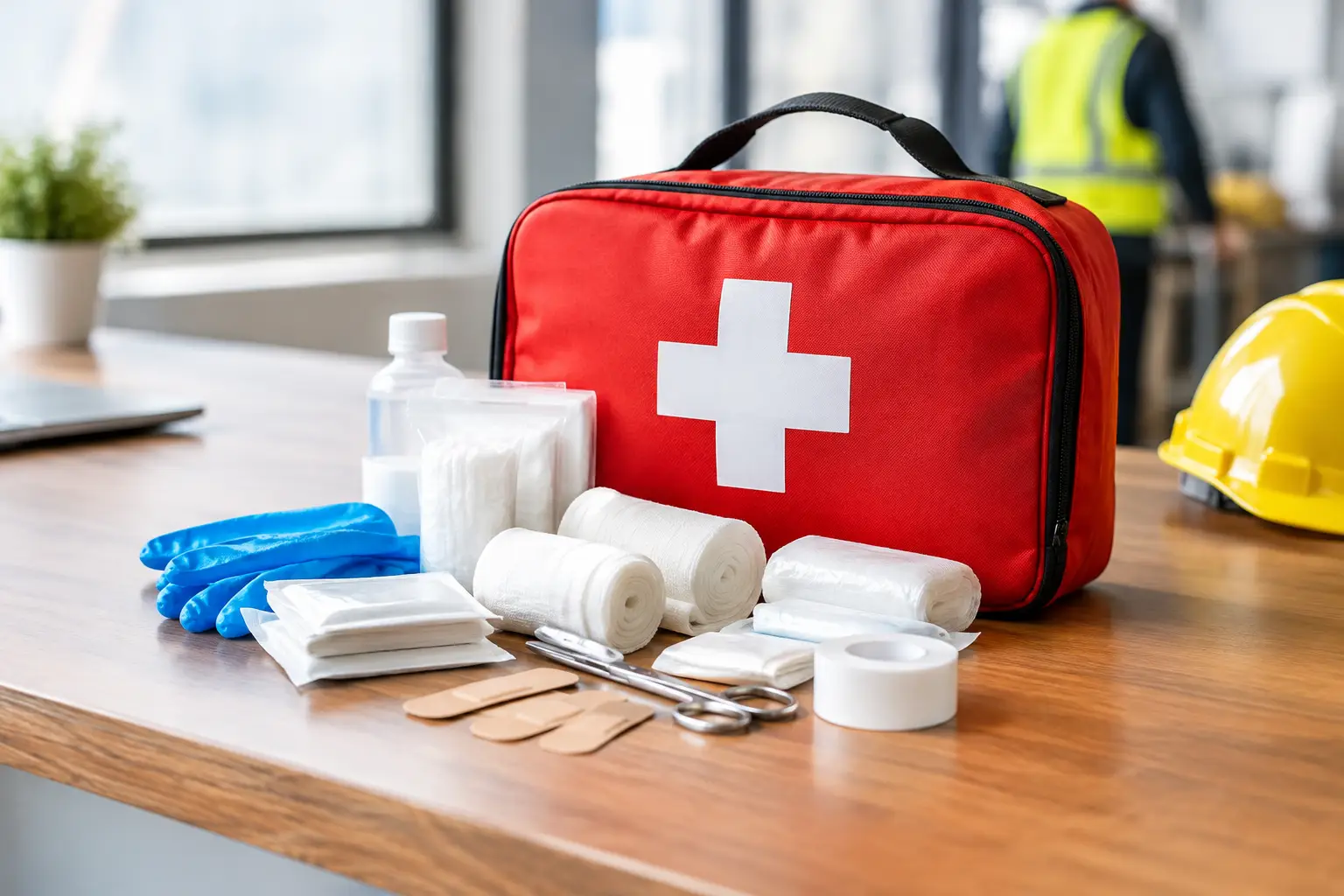
A first aid box that is locked away, short of sterile dressings or unknown to the workforce will not help when an injury occurs. For South African employers, workplace first aid kit requirements are not simply a buying exercise. They form part of a practical system for responding quickly to injuries, stabilising an employee and getting the right level of medical help.
The right arrangement depends on the work being done, the number of people on site and the hazards they face. A low-risk office, a busy warehouse, a welding bay and a construction site should not be supplied or managed in exactly the same way. The objective is clear: suitable first aid equipment must be available, accessible and maintained for the risks present.
Start with the legal duty and the site risk assessment
Under South Africa’s Occupational Health and Safety framework, employers are required to provide first aid equipment that is readily available and adequate for the workplace. The General Safety Regulations set expectations around first aid boxes, their contents, accessibility and trained first aiders. Particular industries, client specifications and site rules may add further requirements.
However, compliance should be the starting point rather than the finish line. A risk assessment tells you whether the minimum arrangement is genuinely suitable. Consider the nature of likely injuries, the number of employees and visitors, the layout of the premises, shift patterns, travel time to medical care and whether teams work alone or at remote locations.
For example, paper cuts and minor slips may be the principal concerns in an administration office. A workshop using grinders, welding equipment and chemicals may need to prepare for burns, eye injuries, lacerations and more serious trauma. A large distribution centre may need several clearly positioned boxes because a single unit at reception is not readily accessible to a picker at the far end of the facility.
Workplace first aid kit requirements: what must be in place
A suitable first aid arrangement combines equipment, people and process. A stocked box alone is not enough. Employers should identify trained first aiders, display their names and contact details, make the location of first aid boxes clear, and ensure employees know how to call for assistance.
First aid boxes must be easy to reach, protected from dust, moisture and unauthorised removal, and clearly marked. They should not be stored behind a supervisor’s locked office door or in a cupboard that only one person can access. On multi-level sites, in large buildings or where crews are dispersed, additional boxes may be necessary.
The prescribed and recommended contents can change with applicable regulations and workplace risk. As a practical baseline, a workplace first aid box commonly includes:
- sterile adhesive dressings in suitable sizes;
- sterile gauze swabs and wound dressings;
- roller, triangular and conforming bandages;
- disposable gloves and a protective face shield for resuscitation;
- antiseptic preparations where appropriate;
- eye pads, sterile saline or an eye-wash solution for the risk involved;
- scissors, tweezers, safety pins and adhesive tape; and
- a first aid guide, incident documentation and emergency contact information.
Where burn hazards are present, appropriate burn dressings or burn gel may be justified. Eye-wash equipment deserves separate attention in facilities handling chemicals, dusts, metal particles or other eye hazards. The correct solution and delivery method depend on the substance and the risk assessment. For corrosive splashes, immediate flushing capacity and proximity to the hazard are critical.
Do not add medicines to the workplace first aid box as a matter of routine. Medication introduces questions of contraindications, consent, dosing and professional responsibility. The first aid kit should support safe initial treatment, not replace clinical judgement or medical care.
Match the kit to the environment
Procurement teams often need a consistent standard across multiple sites, but standardisation should not flatten real differences in risk. A useful approach is to establish a core first aid kit for all locations, then add site-specific modules.
A corporate office may require compact, clearly marked kits positioned near occupied work areas, kitchens and reception. A manufacturing facility may need durable wall-mounted boxes, portable kits for maintenance crews and additional supplies near higher-risk workstations. Mobile teams, security personnel and drivers need compact vehicle or personal-response kits that can travel with them without becoming damaged or depleted.
In welding and fabrication environments, first aid planning must work alongside the broader control measures. Suitable welding helmets, gloves, flame-resistant workwear, screens, ventilation and fire equipment reduce the likelihood of injury. First aid supplies then provide the immediate response if a burn, cut or eye incident still occurs. They are not a substitute for PPE or safe work procedures.
Similarly, a kit located near a loading area should be supported by the controls that prevent common incidents: safety footwear, high-visibility garments, gloves, traffic management and sound housekeeping. First aid is the final layer of response, not the primary risk control.
Appoint trained people and plan the response
The number of trained first aiders should reflect the number of employees, the hazards and how people are distributed across shifts and work areas. A first aider who works only day shift does not provide cover for a night team. A trained employee based at head office may not be useful to a crew working at a remote project.
Training must be current and suitable for the workplace. First aiders should understand the limits of their role, how to use the available equipment, how to summon emergency services and how to record an incident. They also need enough confidence to act calmly, protect themselves from exposure to blood or bodily fluids and hand over effectively to medical professionals.
Emergency information should be visible near the kit and in key work areas. This may include site addresses, internal contacts, emergency service numbers, the location of the nearest clinic or hospital, and procedures for reporting incidents. Where a site has security access controls, gate personnel should know how to direct emergency responders without delay.
Inspect, replenish and control expiry dates
First aid readiness is lost gradually. A dressing is used but not replaced. Gloves perish in heat. Eye-wash expires. The box is moved during a renovation and never returned. Regular inspections prevent these small failures from becoming a serious gap during an emergency.
Assign a named person to inspect each kit at a defined interval, and after every reported use. A simple inspection register should record the location, date checked, missing or used items, expiry dates, corrective action and the inspector’s name. This gives safety officers and procurement teams a clear view of what needs replenishment and helps demonstrate ongoing control.
Store replacement stock in a clean, dry location and use consistent product specifications where possible. Quality matters. Dressings that do not remain sealed, gloves that tear easily or boxes that cannot withstand an industrial environment create false confidence. Reliable supplies also make budgeting easier because sites can replenish a standard range rather than purchasing unsuitable substitutes in a hurry.
Avoid common first aid kit failures
One common failure is choosing a kit by price alone. A low-cost box may appear complete but contain quantities or item types that do not match the site’s workforce and hazards. Another is buying an extensive kit without training employees to locate it or use the contents correctly.
Poor placement is equally risky. Kits should be near enough to the people and hazards they serve, but not inside the danger zone itself. In areas where chemical exposure is possible, make sure eye-wash and emergency flushing arrangements are positioned so they can be reached immediately.
Finally, avoid treating incident records as paperwork after the fact. Repeated cuts, burns or eye irritations can reveal a need for better guarding, different gloves, revised work practices or further PPE selection. First aid data should feed back into the safety programme.
GHS Health & Safety CC can assist organisations in selecting dependable first aid products alongside the PPE and workplace safety equipment that prevent injuries in the first place. The most effective first aid provision is the one your team can find, use and trust without hesitation when every minute counts.