

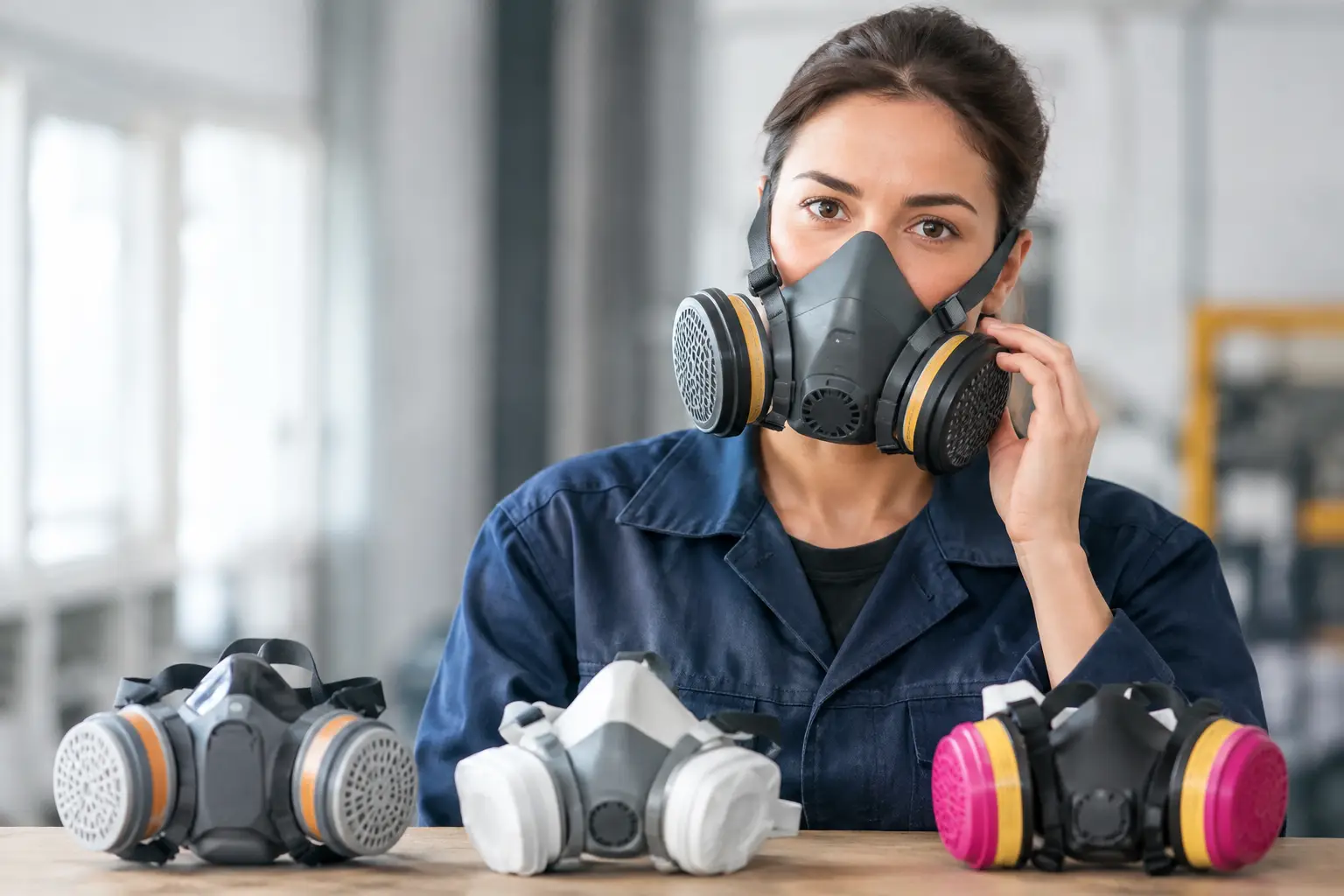
A respirator mask review should begin at the workface, not with the catalogue page. A mask that looks suitable but does not seal properly, uses the wrong filter, or is too uncomfortable for a full shift can leave workers exposed and undermine compliance. For procurement and safety teams, the right choice is the one that controls the identified hazard while remaining practical to issue, wear, maintain and replace.
Respiratory protection is not a one-size-fits-all purchase. Dust from cutting concrete, welding fume, paint vapours, chemical splashes and low-oxygen confined spaces each call for different controls. The respirator is only one part of a wider programme that should first consider elimination, substitution, enclosure and ventilation.
What a respirator mask review should assess
A useful review compares protection, fit, compatibility and lifetime cost in the actual working environment. Product specifications matter, but they do not replace a site risk assessment or a correctly managed respiratory protective equipment programme.
Start by identifying the contaminant. Is it a particulate such as nuisance dust, wood dust, silica, metal fume or asbestos-related material? Is it a gas or vapour from solvents, acids, ammonia or other chemicals? Could both be present? The answer determines whether a disposable particulate respirator, reusable half-face mask, full-face respirator or powered air-purifying respirator is appropriate.
Concentration and task duration also matter. A short, occasional task may suit a disposable option where the risk assessment permits it. Repeated grinding or welding across a long shift often makes a reusable system more manageable and economical, provided filters, cleaning and storage are properly controlled. A respirator must never be selected for an atmosphere that may be oxygen-deficient or immediately dangerous to life or health. Those situations require specialist assessment and supplied-air or self-contained breathing equipment.
Protection level and filter selection
For particulate work, look beyond the word “dust”. Fine silica, welding fume and certain biological or industrial particulates can present a materially higher risk than larger non-toxic particles. Select the required protection level according to the hazard assessment and confirm that the respirator and filter carry recognised, applicable approvals.
Disposable filtering facepieces are commonly grouped into performance classes such as FFP1, FFP2 and FFP3. Higher classifications provide greater filtration performance when correctly fitted, but they can also increase breathing resistance. This is a meaningful trade-off in hot workshops, construction sites and physically demanding work.
Reusable respirators allow filters to be matched to the hazard. Particulate filters are not interchangeable with gas and vapour cartridges, and a cartridge suitable for one chemical family may be unsuitable for another. Combination filters may be necessary where particulate and vapour exposure occur together, such as some painting, spraying and chemical handling activities. Check the chemical safety data, filter designation, service-life guidance and the manufacturer’s instructions before issuing equipment.
Disposable, reusable or powered: a practical comparison
Disposable respirators
Disposable respirators are straightforward to distribute and useful for controlled short-duration tasks. They remove the requirement to clean and store a facepiece, which can simplify work on temporary sites or for visitors. Models with a moulded cup, fold-flat design, adjustable nose clip and exhalation valve each have operational advantages depending on storage, communication and heat.
Their limitation is consistency. A disposable mask cannot compensate for poor fitting, a damaged nose clip, moisture saturation or repeated removal and refitting. Site supervisors should also plan for sufficient stock. A low unit price offers little value if workers reuse a disposable respirator beyond its intended condition because replacements are not readily available.
Reusable half-face respirators
A reusable half-face respirator is often the strongest all-round option for regular exposure to dust, fumes or approved vapours. The facepiece can offer a more dependable seal and accepts replaceable filters, reducing waste and improving control over recurring tasks. For maintenance teams, fabrication workshops and contractors with frequent exposure, this can produce a lower cost per protected shift than continual use of disposable masks.
The trade-off is programme discipline. Facepieces require inspection, cleaning, hygienic storage and a clear filter-change process. Cartridges do not last indefinitely, and relying on smell as the only warning that a vapour filter is spent is not a safe control. Establish replacement intervals based on the contaminant, concentration, humidity, workload and manufacturer guidance.
Full-face and powered respirators
Full-face respirators protect the eyes as well as the respiratory system where the selected filter arrangement is suitable for the risk. They can be valuable where irritating vapours, splashes or high levels of particulates create a combined eye and breathing hazard. They can, however, affect communication, peripheral vision and compatibility with other PPE.
Powered air-purifying respirators can reduce breathing effort and improve comfort during long, high-exertion tasks. They are particularly worth considering where workers struggle to tolerate negative-pressure masks, provided the application, protection factor and equipment configuration are appropriate. They bring higher upfront costs and require batteries, charging routines, inspections and trained users. For the right workforce, those requirements can be justified by better wear time and acceptance.
Fit is where protection becomes real
The filter cannot protect a worker if air enters through gaps around the face seal. A respirator should be fit tested for the individual wearer and checked each time it is put on. Qualitative and quantitative fit testing have different uses, but both support the same objective: confirming that the selected model and size can achieve an effective seal for that person.
Facial hair in the sealing area is a common cause of failure. Safety officers need a practical, consistently applied policy for employees and contractors whose work requires tight-fitting respiratory protection. Spectacles, head coverings, facial shape, perspiration and movement can also affect the seal.
Comfort should not be dismissed as a preference issue. Pressure points, heat build-up, poor adjustability and difficult breathing make workers more likely to loosen, remove or misuse a respirator. Trial a small number of suitable models with representative wearers before committing to a large order, especially across mixed shifts and roles.
Compatibility with the rest of the PPE issue
A respirator mask review should consider the complete PPE arrangement. Welding helmets, safety spectacles, hard hats, hearing protection and face shields can interfere with straps or compromise a seal. In some cases, a full-face respirator may remove the need for separate eye protection against the same airborne hazard, but it does not automatically replace all required impact protection.
For welding operations, review the respirator alongside the helmet and any protective clothing. For paint preparation, consider goggles, coveralls and gloves. In food, pharmaceutical or clean environments, cleaning and contamination-control requirements may influence whether a reusable system is workable. The safest choice is the system workers can wear correctly together, not the highest-rated item viewed in isolation.
Cost control without reducing protection
Procurement decisions should compare total ownership cost rather than box price alone. Include expected usage, filter replacement, cleaning materials, storage, fit testing, training, wastage and downtime caused by unavailable stock. Standardising on a manageable range can simplify training and replenishments, but standardisation should never force one respirator onto incompatible hazards or users.
A practical purchasing review should confirm these points before approval:
- the documented airborne hazard, exposure level and required protection;
- the applicable approval, filter type and manufacturer instructions;
- fit testing, user training and facial-hair controls for tight-fitting models;
- compatibility with helmets, eyewear, hearing protection and task-specific PPE;
- a reliable replenishment plan for masks, filters, valves and spare parts; and
- cleaning, storage, inspection and disposal responsibilities.
Certificates and technical documentation should be checked against the exact model and filter being ordered, not just the product family name. Counterfeit or poorly documented respiratory products create an unnecessary risk, particularly where procurement is driven solely by price. Working with an established PPE supplier helps buyers verify suitable options, maintain continuity of supply and obtain practical support when site conditions change.
When a review identifies a gap
If workers report odours inside a mask, unusual breathing resistance, damaged straps, fogging, discomfort or difficulty working alongside other PPE, treat it as a review trigger. The cause may be a spent filter, poor fit, incorrect assembly, inadequate training or a change in the task itself. Reissue of the same product without investigating the cause can repeat the problem.
GHS Health & Safety CC supports organisations with respiratory protection options alongside the wider PPE needed for industrial, construction, welding, logistics and facilities environments. The most effective order begins with a clear description of the task, contaminant, shift pattern and existing PPE, allowing the selection to be based on operational need rather than assumption.
A respirator earns its place in the PPE issue only when the right worker can wear it correctly for the full task. Make that the test behind every purchase decision.