

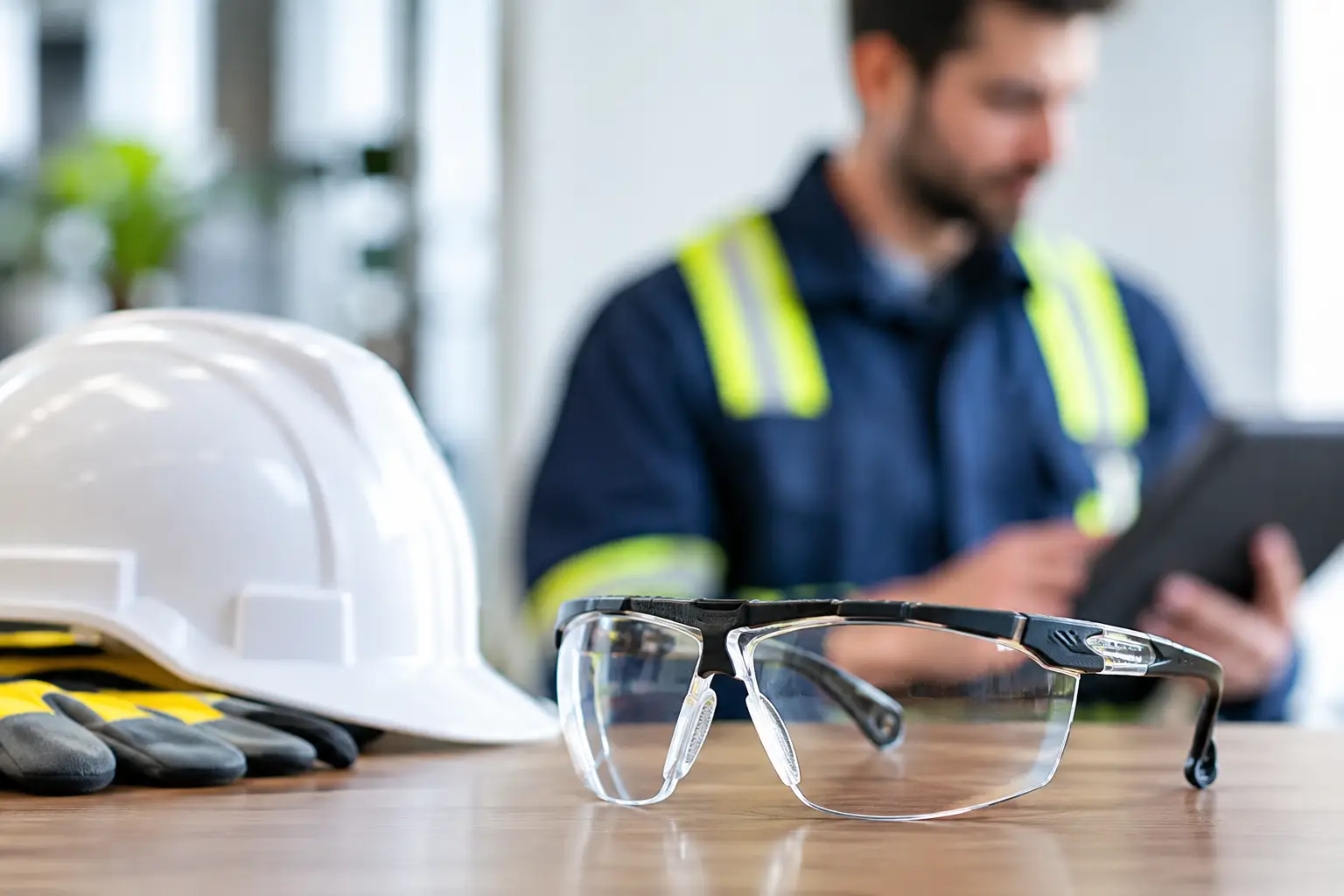
A scratched lens, poor side coverage or a pair of spectacles that will not sit comfortably beneath a hard hat can quickly become a reason workers stop wearing eye protection. Selecting safety eyewear suppliers is therefore not simply a purchasing exercise. It is a decision that affects compliance, worker acceptance, site productivity and the ability to respond when conditions change.
For procurement teams and safety officers, price matters, but it cannot be the only measure. The lowest-priced option can become expensive when products are unavailable, documentation is incomplete or the eyewear supplied does not suit the task. A dependable supplier helps an organisation match the right protection to the actual hazard and maintain that standard across every shift and site.
Start with the hazards, not the catalogue
Safety eyewear should be selected according to a documented risk assessment. A general-purpose clear spectacle may be suitable for low-impact workshop tasks, but it is not automatically appropriate for grinding, chemical handling, welding support work or outdoor operations with intense glare. The hazard determines the level and type of protection required.
Consider whether employees face flying particles, dust, liquid splashes, molten material, optical radiation, glare or a combination of these risks. The work environment also matters. A warehouse operative moving between indoor loading areas and bright yards may need a different lens solution from a machine operator working under artificial light all day.
A capable supplier should ask practical questions before recommending a product: what task is being performed, what equipment is used, whether prescription spectacles are worn, and which other PPE must be used at the same time. This conversation helps prevent a common error – buying one eyewear style for every department because it appears simpler to order.
What dependable safety eyewear suppliers should provide
The strongest suppliers do more than list spectacles, goggles and face shields. They make it easier to source, assess and replenish products with confidence. When evaluating a supplier, look for five essentials:
- A broad choice of safety spectacles, goggles, visitor eyewear, welding filters and face shields for different workplace risks.
- Clear product specifications, including applicable standards, lens markings and stated performance characteristics.
- Products from established manufacturers with traceable documentation and consistent quality.
- Stock availability and realistic lead times, particularly for regularly issued items and project quantities.
- Responsive support when a product needs to be changed, a certificate is required or a replacement is urgently needed.
These points are closely connected. A wide range without technical information leaves buyers guessing. Excellent products without dependable availability can interrupt site issue programmes. Equally, rapid delivery has limited value if the product does not provide suitable protection for the task.
Certification and product information need careful attention
Certification is a core part of responsible PPE procurement. Buyers should be able to identify the standard applicable to the eyewear and understand what the relevant markings mean for its intended use. In many industrial environments, products are assessed against recognised eye-protection standards such as EN 166, alongside relevant lens or filter requirements where applicable.
However, a standard marking is not a substitute for task-based selection. Impact resistance, splash protection, ultraviolet filtering, anti-fog treatment and shade selection each address different needs. For example, an anti-fog coating can improve visibility for workers moving between temperature zones or performing physically demanding work, but it does not replace the need for the correct impact rating or a close-fitting design where splash exposure is present.
Ask suppliers for product data and certificates where your internal procedures, client requirements or site rules require them. This is especially valuable for tender submissions, contractor onboarding and safety audits. A supplier that can provide accurate information promptly reduces administrative pressure on procurement and safety teams.
Comfort is a safety control, not a cosmetic preference
Eye protection only works when it is worn correctly and consistently. If spectacles pinch behind the ears, slide down with perspiration or mist up in humid conditions, workers may lift them, alter them or leave them off. That creates a gap between the PPE issued and the protection actually being used.
Fit testing is not limited to respiratory protection. Trialling several eyewear styles with a representative group of users can reveal issues that a product photograph cannot. Check fit with hard hats, hearing protection, respiratory equipment and prescription spectacles. For some roles, over-spectacles may be appropriate. For others, prescription safety eyewear may provide a better long-term result.
Goggles can offer improved coverage where dust or splash risk is higher, but they may retain heat and fog more readily than open spectacles. Face shields add an important layer of protection for particular tasks, yet they are often used with primary eye protection rather than as a replacement for it. The correct choice depends on the risk assessment, the work method and the other controls in place.
Choose lenses for the working environment
Lens selection affects both protection and performance. Clear lenses are widely used indoors, while tinted or smoke lenses can assist with glare in outdoor work. Indoor-outdoor lenses may suit teams who repeatedly move between different light conditions, although they may not be the best choice for detailed work in consistently low-light areas.
Anti-scratch and anti-fog properties also deserve consideration. In dusty fabrication areas, lenses may need frequent cleaning and replacement, even when they have a scratch-resistant coating. In cold stores, rain, hot work or high-humidity environments, fogging can be a significant visibility concern. The practical question is not whether a feature sounds useful, but whether it addresses a known issue on your site.
For welding applications, select equipment designed for the process being undertaken. Helpers and nearby personnel may also require suitable protection from arc radiation and flying particles. A reputable supplier can help distinguish between eyewear for general workshop exposure and purpose-designed welding eye and face protection.
Supply continuity protects more than the budget
Standardising approved eyewear can simplify ordering, inductions and worker training. It also makes it easier to hold sensible stock levels for replacements, visitors and new starters. But standardisation should not force every employee into a product that does not fit or does not suit the task.
A practical approach is to approve a small, well-defined range: perhaps a clear everyday spectacle, a higher-coverage goggle, an outdoor lens option and task-specific face protection. This gives supervisors a manageable issue process while preserving appropriate choices for different roles.
Discuss consumption patterns with your supplier. Frequent replacements can point to harsh working conditions, poor storage, inadequate cleaning practices or a product that is not suited to the job. The answer may be a more durable model, better eyewear storage or clearer rules for inspection and replacement. It is not always necessary to purchase the most expensive product, but it is necessary to understand the cost of repeated failure.
Assess service as carefully as the product
The most useful supplier relationship is built before an urgent requirement arises. Assess how quickly enquiries are answered, whether quotations describe products clearly and whether the supplier can support both routine replenishment and larger project orders. Consistent service matters when multiple branches, contractors or departments need the same approved range.
For organisations sourcing wider PPE, there is value in working with a partner that understands how eye protection fits into the complete safety requirement. At GHS Health & Safety, the focus is on helping customers source dependable safety products across their operations, supported by established supplier relationships and direct, practical assistance.
Before placing a significant order, request samples or arrange a wear trial where the application warrants it. Confirm the product specification, expected availability, replacement options and any documentation your site needs to retain. These checks take little time compared with resolving an unsuitable issue after eyewear has already been distributed.
The right supplier should make safe choices easier for your team: clear information, suitable options, dependable stock and support when conditions on site demand a change. That is the standard worth setting before the next pair of safety spectacles is issued.