

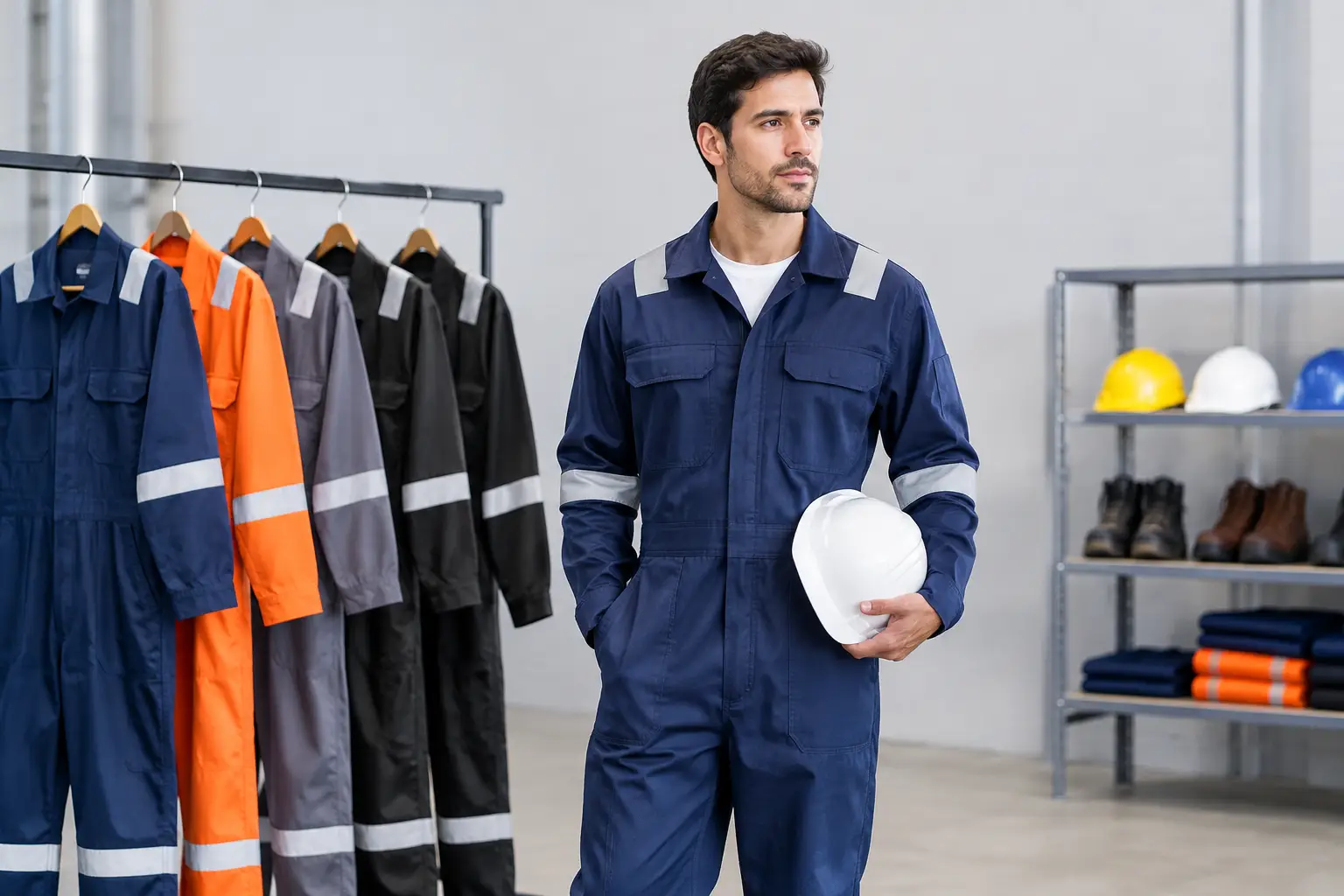
A boiler suit that tears at the knee, catches on equipment or leaves a worker overheated is more than an inconvenience. It can affect mobility, morale, productivity and the consistent use of required PPE. This boiler suit selection guide helps procurement and safety teams specify workwear around the job, the hazard and the people wearing it, rather than selecting only by colour, price or a standard size run.
A boiler suit, often called a coverall, gives teams a practical single-garment layer for industrial, maintenance, logistics and site work. The right choice protects personal clothing, presents a professional workforce image and supports the other protective equipment required for the task. It is not, however, automatically suitable for every hazard. Fabric construction, garment design and any stated protective performance must match the risk assessment.
Start the boiler suit selection guide with the task
Begin by mapping where and how the garment will be worn. A general maintenance team working indoors faces a different set of demands from road crews, welders, field technicians or workers moving between cold stores and loading areas. Consider the working position, exposure duration, weather, contact with dirt or oils, and whether garments need to withstand repeated industrial laundering.
General-purpose cotton or polycotton boiler suits are often a sensible choice for workshops, warehousing and routine site duties. Polycotton can offer a useful balance of comfort, abrasion resistance and easier care, while a higher cotton content may be preferred where breathability and wearer comfort are priorities. Neither choice should be treated as flame-resistant unless the product is specifically designed, tested and labelled for that purpose.
Where workers are exposed to welding sparks, molten metal, flash fire, electrical arc hazards, chemical splash or significant heat, standard workwear is not enough. Specify certified protective clothing for the identified risk and confirm that the full PPE system works together. A welding jacket or flame-resistant coverall, for example, must be selected alongside suitable gloves, footwear, head and eye protection. For chemical work, consider the substance, concentration, exposure route and decontamination process before choosing a disposable or reusable protective garment.
Choose fabric for the real working environment
Fabric weight matters, but heavier is not always better. A heavier garment can offer improved durability for abrasive, dirty work, yet it may be uncomfortable during physically demanding shifts in warm conditions. If teams work outdoors in South African summer heat or in poorly ventilated plant areas, overheating can lead to workers rolling up sleeves or leaving garments unfastened. That defeats the purpose of the protective layer.
For outdoor and roadside work, high-visibility elements may be necessary. Reflective tape and fluorescent material need to be positioned so that visibility remains effective when workers bend, carry loads or wear additional PPE. A high-visibility boiler suit should be selected against the required visibility standard and the actual light conditions, not simply because it looks bright in a storeroom.
Water resistance also requires care. A standard boiler suit can provide a useful barrier against light dirt and occasional moisture, but it is not rainwear. Workers exposed to prolonged rain need appropriate waterproof outerwear. Similarly, a boiler suit does not replace thermal clothing in freezer environments, nor does it provide respiratory, fall-arrest or electrical protection.
Get fit, sizing and movement right
A boiler suit has to accommodate movement across a full shift. Workers climb ladders, kneel beside machinery, reach overhead, drive forklifts and handle materials. A garment that is too tight across the shoulders or crotch can restrict movement and place strain on seams. One that is too loose can snag on protrusions, rotating equipment or vehicle controls.
Use supplier size charts, but do not rely on chest size alone. Check body length, sleeve length and inside leg measurement, particularly where teams are taller, shorter or have varied body shapes. Arrange fit samples before committing to a large order when possible. The worker should be able to squat, stretch both arms overhead and sit comfortably while wearing the base layers and PPE normally used for the job.
Features such as an elasticated waist, action back, adjustable cuffs and two-way front zip can make a significant operational difference. An action back supports reach without making the overall garment excessively large. Cuffs should close securely without interfering with gloves. A durable zip and protected fastening help reduce failures in demanding use.
Take particular care with pockets. Chest, side and leg pockets can improve efficiency for low-risk tools, notebooks or radios, but they are not appropriate for every environment. Open pockets may collect metal swarf, and loose items can create an entanglement or contamination risk. Pocket design should support the work process, not add a feature that workers cannot safely use.
Build durability into the specification
The lowest unit price can become the highest overall cost when garments fade, shrink, split or require frequent replacement. Procurement specifications should identify the areas most likely to wear out: knees, elbows, seat, zip, seams and pocket edges. Reinforced knees are valuable for maintenance staff and installers who regularly work at ground level. Bar-tacked stress points and strong stitching can extend garment life where workers climb, carry or kneel repeatedly.
Colour selection is also practical. Navy, charcoal and similar darker shades can maintain a tidy appearance in oily or dusty environments, while lighter colours can make contamination easier to identify. The correct choice depends on the task, cleaning process and corporate presentation requirements. If the boiler suit will carry embroidered names, company branding or reflective strips, allow for these additions in the initial specification so placement does not affect pockets, protective panels or garment comfort.
Ask how the garment performs after repeated washing, not just when new. Consistent sizing and colour retention are especially important for organisations issuing uniforms across several sites or replacing garments over time. Where an industrial laundry is used, confirm its wash temperatures, chemicals and repair process. Protective properties, reflective materials and branded applications can all be affected by unsuitable laundering.
Standardise without ignoring worker needs
A clear boiler suit standard reduces ordering errors and helps managers maintain a professional, recognisable workforce. It should define the approved garment style, colour, fabric composition, required protective performance, branding position and available sizes. It should also state when a different garment is required, such as flame-resistant workwear for hot work or rainwear for wet-weather duties.
Standardisation should not mean a one-size-fits-all approach. Different departments may need different configurations, and women’s fit options can improve comfort and compliance where available. Seasonal layering, maternity requirements and religious or medical considerations should be handled through a practical approval process rather than informal substitutions.
Keep a simple issue record showing the garment type, size, issue date and replacement reason. This gives procurement teams useful evidence about wear rates, recurring fit concerns and whether a more durable specification would offer better value. It also helps avoid the common problem of ordering replacements that do not match the existing uniform programme.
Ask the supplier the right questions
Before placing an order, establish whether the item is intended as general workwear or protective clothing for a defined hazard. Request product information on fabric composition, garment construction, available sizes, care instructions and any applicable certification. For specialist garments, verify the relevant standard, the limitations of protection and the maintenance requirements.
Availability matters as much as the original selection. A suitable boiler suit that cannot be replenished in common sizes can disrupt uniform consistency and delay onboarding. An experienced supplier can help align garment specifications with stock availability, branding requirements and related PPE so teams receive a practical, coordinated issue.
The best boiler suit is the one workers can wear properly for the whole shift, while meeting the protection and presentation needs of the job. A considered specification gives your team dependable workwear today and makes every replacement order easier tomorrow.